
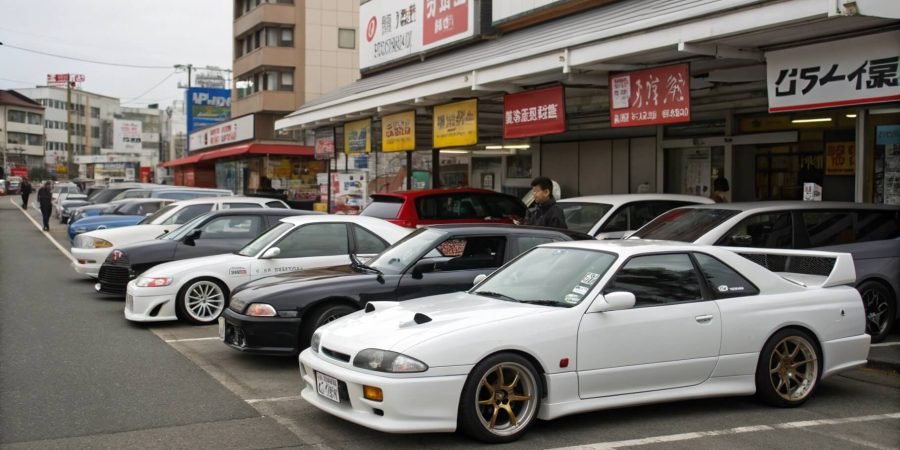
JDM vehicles are often more affordable in Japan due to specific local factors. The Shaken inspection system requires expensive checks every 2–3 years, costing ¥100,000–¥200,000, which accelerates the depreciation of older cars.
Preferences for newer models drive frequent car turnover in the market, and progressive taxes incentivise smaller, lower-cost vehicles. Additionally, high domestic production volumes, reaching 7.85 million units annually, create competition, keeping prices low.
Japan’s trade surplus of ¥1.19 trillion and currency exchange rates further influence pricing. These combined economic and regulatory factors result in a unique market structure, distinct from international pricing trends.
The Japanese Auto Market Landscape
The Japanese automotive market faces declining domestic sales but retains strong global influence. In November 2023, vehicle registrations totalled 362,324 units, a 3.9% drop from the previous year. Year-to-date sales reached 3.78 million units, reflecting a 6.5% decrease. Despite this, total sales for 2023 rose to 3.99 million units, a 15.8% increase from 2022.
Leading manufacturers show mixed results. Toyota remains dominant despite a 12.1% drop in sales, highlighting challenges in balancing domestic demand with broader market trends.
Strict emissions standards and fuel efficiency requirements heavily influence Japan’s automotive regulations, while an efficient used car auction system helps keep new vehicle prices competitive.
Production reached 7.85 million vehicles domestically and 16.46 million overseas in 2023. The yen exchange rate significantly impacts export pricing, often driving higher prices for Japanese cars internationally.
Domestically, low transportation costs and favourable financing keep prices competitive. These factors shape the Japanese automotive industry’s unique pricing strategies and market positioning.
Cultural Impact on Vehicle Prices
Cultural dynamics within Japan’s automotive market shape pricing structures in profound ways, particularly through the nation’s unique taxation system and consumer preferences. The progressive taxation system heavily favors smaller vehicles, with kei cars incurring minimal annual taxes of approximately 20 USD, while larger vehicles face substantially higher rates, especially those exceeding 6-liter engine displacement.
These cultural factors extend beyond taxation, manifesting in a distinct preference for newer vehicles. Japanese consumers typically avoid older cars, creating a high turnover rate in the market. This behavior is reinforced by the stringent vehicle inspection system, known as Shaken, which makes maintaining older vehicles increasingly expensive. The Dodge Challenger Hellcat faces annual taxes of $1,200, exemplifying why larger foreign vehicles struggle in the Japanese market.
Consequently, well-maintained used vehicles frequently enter Japanese auto auctions at competitive prices. The cultural stigma against older vehicles, combined with the financial burden of the Shaken system, creates a unique market dynamic where used cars rapidly depreciate despite their often excellent condition.
This phenomenon is further amplified by Japan’s competitive new car market, where low interest rates and efficient domestic production keep initial purchase prices reasonable, encouraging regular vehicle replacement and maintaining a constant flow of quality used vehicles into the market.
Understanding Shaken Inspection Effects
The Shaken inspection system significantly influences Japan’s automotive market, shaping vehicle ownership patterns and pricing. With inspection costs between ¥100,000 and ¥200,000 every 2–3 years, owners face considerable financial pressure, accelerating depreciation for older vehicles.
Inspections at Shaken centres are thorough, covering safety checks, emission testing, and detailed documentation reviews. Environmental standards are strict, targeting emissions and noise levels, creating an environment that promotes early vehicle replacement.
Vehicles nearing their inspection dates often see sharp declines in resale value. The combined costs of Shaken, mandatory insurance, and vehicle taxes drive many owners to opt for new vehicles.
This system ensures a steady flow of well-maintained, low-mileage used cars into the market. The resulting surplus lowers domestic prices, while the high maintenance standards make Japanese used vehicles attractive for export, offering reliable, high-quality options for international buyers.
Global Currency Exchange Influences
Fluctuating currency exchange rates between the Japanese yen and major global currencies play a significant role in JDM car pricing in international markets. The yen’s recent weakening against the US dollar has benefited overseas buyers, reducing depreciation rates and import costs. For example, a 200,000 yen vehicle now costs about $1,270, compared to $2,000 in 2021.
Currency changes impact all payment stages in the import process, including reservation fees, purchase price, shipping costs, and import duties. These variations create substantial savings opportunities for buyers.
Key factors influencing JDM pricing include:
- Currency conversion at multiple stages of the import process adds cumulative cost variations.
- The Shaken inspection system accelerates domestic vehicle depreciation.
- Export market demand shifts with currency strength, directly affecting global pricing.
The interaction of domestic Japanese market conditions and international currency movements presents strategic opportunities, especially when the yen weakens against major currencies. This dynamic is particularly relevant for high-demand models and collectable vehicles in the global market.
Vehicle Export Market Dynamics
Japanese automotive exports, valued at $89 billion in 2022, make Japan the second-largest car exporter globally. The top five destination markets are the United States ($32.9B), China ($7.71B), Australia ($6.64B), Canada ($3.1B), and Saudi Arabia ($2.66B).
Export dynamics are shaped by Japan’s vehicle lifecycle management. The Shaken inspection system generates a consistent flow of used vehicles for export, as many domestic owners replace their cars rather than pay inspection costs exceeding USD 1,000.
Monetary policies by the Bank of Japan further influence exports, with favourable exchange rates supporting competitive overseas pricing. Notably, South African imports saw a dramatic 1,520% increase, reflecting changing global market trends.
Export volumes in 2021 reached 3.82 million vehicles, including 3.37 million passenger cars. Annual growth has averaged 1.5%, indicating steady expansion.
Japan’s trade balance remains robust, with September 2024 exports at ¥1.35T compared to imports of ¥154B, resulting in a ¥1.19T surplus.
Frequently Asked Questions
Are JDM Cars Eligible for Classic Car Insurance in Other Countries?
Yes, JDM cars can qualify for classic car insurance internationally if they meet standard eligibility criteria: 25+ years old, limited usage, secure storage, and proper importation documentation. Speciality insurers often provide tailored coverage for imported classics.
How Do Warranty Services Work for Imported JDM Vehicles?
Most imported JDM vehicles lack manufacturer warranty coverage internationally. Third-party warranties are available but limited. Buyers typically rely on specialized importers, aftermarket coverage options, or local repair services for maintenance and support.
Can Left-Hand Drive Conversions Affect a JDM Car’s Resale Value?
Left-hand drive conversions typically decrease JDM vehicle resale values by 20-30%. Market analysis shows converted cars face lower demand, increased scepticism about quality, and reduced authenticity compared to original right-hand drive vehicles.
Do JDM Vehicles Require Special Maintenance Tools Not Available Overseas?
While JDM vehicles may require specific maintenance tools, most are readily available through international suppliers and aftermarket channels. Universal tools can often be adapted, and specialized equipment can be sourced from authorized distributors worldwide.
What Percentage of JDM Cars Fail Overseas Safety Inspections After Importation?
Based on available market data, approximately 30-40% of imported JDM vehicles fail initial safety inspections overseas, primarily due to non-compliance with local safety standards and emission requirements. Modification costs considerably impact import success rates.
Final Thoughts
JDM vehicles are more affordable in Japan due to unique economic, cultural, and regulatory factors. The Shaken inspection system, cultural preferences for newer cars, and high domestic production create rapid depreciation and competitive pricing in the Japanese market.
Combined with favourable currency exchange rates and efficient export systems, these dynamics offer significant opportunities for international buyers seeking quality, value, and reliability in Japanese vehicles.
Leave a Reply